

Procurement with Purpose
How Small Decisions Shape a Sustainable Future


This month we focused on Sustainable procurement as a powerful lever to drive change within the border sustainability landscape. Behind every purchase lies a decision that shapes supply chains, directs resource flows and leaves a lasting impact on the community. Procurement is no longer a side dish; it is one of the most important ingredients to build a resilient future. It is no longer about price or quality. It is about action, values, influence and the legacy that we leave behind.
In this edition, you’ll find our monthly insights and recent updates to our online Community Hub.

Global procurement in 2025 is being reshaped by sustainability goals, AI-driven decision-making, and shifting tariffs, prompting companies to rethink sourcing strategies, supplier relationships, and risk management. A coalition of global organizations is pushing to make sustainable procurement the default in Europe’s construction sector, aiming to transform how public infrastructure is built. Industries are ramping up sustainable steel procurement, favouring low-carbon materials and transparent supply chains. The EU has published green procurement guides for graphic paper and tissue, streamlining ecolabel use in tenders. It has also released procurement templates and guidelines for smart communities designed to support cities looking to acquire Local Digital Platforms and Twins. Looking ahead, the EU’s 2025–2030 Plan sets tougher eco-design rules to boost circular and efficient products on the European market.
The EcoVadis 2025 Global Supply Chain Sustainability Index reveals steady progress in sustainable procurement, led by finance, legal, and manufacturing sectors. Global sustainability leaders highlighted that sustainable procurement is playing a key role in aligning ESG goals across supply chains. The State of Social Procurement 2025 data advocates social procurement to unlock business value and drive inclusive impact through supply chains. The IFPMA highlights how sustainable procurement strengthens global health by ensuring secure, resilient supply chains that support equitable access to medicines.
Australia’s ESP Policy positions government procurement as a key driver toward net zero, starting with major construction projects and expanding through stronger carbon evaluation tools and supplier engagement. Meanwhile, China’s private sector is accelerating supply chain expansion in Southeast Asia through strategic M&A, aiming to localize operations, reduce geopolitical risk, and strengthen regional resilience.
Over half of corporate buyers plan to drop unsustainable suppliers, marking a sharp shift toward responsible procurement. SAB becomes the first MEA bank to earn ISO 20400, reinforcing its ESG-driven procurement aligned with Vision 2030. Nescafé surpassed its 2025 sourcing goal ahead of schedule, with 88% of coffee now responsibly sourced through regenerative practices and farmer support programs.
A new UN report urges responsible financing and investment in energy to accelerate the shift to renewables, reduce emissions, and support inclusive, sustainable development. On the sustainable supplier and resourcing side, Clariant unveiled titanium-based catalyst solutions to enable more sustainable polyester production, reducing its environmental impact and enhancing recyclability. The Pakistan-US partnership on critical minerals is strengthening global mineral supply chains. Braskem’s focus on bio-based and recycled plastics that advance circularity and low-carbon innovation reinforces its leadership in sustainable solutions.
The DHL 2025 E-commerce Trends Report highlights rising demand for sustainable delivery, AI-driven personalization, and resilient supply chains. Hohenstein and GoBlu have partnered to advance sustainable supply chain management in the textile industry, helping brands meet environmental and regulatory goals.
Sustainable procurement is changing fast, from smarter tools to stronger climate goals. It’s about choices: what we buy, who we support, and how we shape the future. As we move ahead, lets pause and question how we make these choices count for everyone.
Join us in the conversation.



This month we spoke with Melissa de Roquebrune, a global connector and enabler whose journey from Canadian health foundations to the heart of sustainable procurement networks reveals how curiosity, collaboration, and community-building can unlock systemic change.
On bridging worlds: Melissa’s path wasn’t rooted in procurement it was shaped by a desire to leave things better than she found them. From fundraising at UNICEF Canada to co-building the Sustainable Procurement Pledge (SPP), she saw the need to connect those who understand systems with those tasked to implement them. “We’re not the experts,” she shared. “We’re the enablers.”
On why procurement matters: Procurement professionals manage trillions in global spend, often without realizing the scale of their influence. Melissa sees this as a hidden superpower: “Even tactical jobs have global impact.” At SPP, she’s helping professionals wake up to their potential, build networks, and act at scale because she believes every small decision shapes our shared future.
On shifting mindsets: From Denmark to the MENA region, Melissa is witnessing a shift from asking “what is sustainability?” to “how do we get it done?” She highlights the importance of inclusive chapters, peer-led learning, and translating resources to meet local needs. “We grow by being questioned,” she said. “That’s how we build a movement.”
On what’s next: Melissa is focused on empowering everyday decision-makers, aligning language across sectors, and connecting CFOs, CPOs, and CSOs to co-create solutions. Her call to action? “Start. Try. Take a step forward. Procurement gets things done.”
Read the full conversation with Melissa de Roquebrune and discover how sustainable procurement is becoming a powerful lever for climate and social impact.


This month we explored the WSN Study on building resilient supply chains in emerging markets. The authors present a grounded, practitioner-informed framework that integrates sustainability and stakeholder collaboration to navigate systemic challenges.
The Four Pillars of Resilient Supply Chains in Emerging Markets
Sustainable Procurement
The study emphasizes integrating ESG criteria into purchasing which includes:
Lifecycle assessments to reduce environmental impact
Eco-friendly material sourcing
Supplier performance evaluations based on ethics and sustainability
Clear KPIs and procurement policies that embed resilience into operations
Stakeholder Engagement
The importance of mapping stakeholder influence and interests to build trust and alignment. Effective engagement includes:
Collaborating with suppliers, communities, governments, and NGOs
Co-creating solutions that reflect local realities
Addressing community concerns to avoid disruptions and foster shared ownership
Contextual Adaptation
Emerging markets face unique challenges like economic volatility, infrastructure deficits, resource constraints, and environmental risks. The study urges businesses to:
Tailor strategies to local conditions
Invest in capacity-building for SMEs and workforce development
Use adaptive technologies like blockchain, drones, and mobile platforms to overcome systemic gaps
Innovation and Empowerment
The study showcases how digital tools and policy frameworks can empower supply chain actors to:
Monitor operations in real time
Automate and optimize logistics
Advocate for supportive regulations
Scale sustainable practices through training and incentives
Sustainable procurement is not just a checklist, it’s a strategic lever for long-term value creation.
Let us join in for the conversation and co-create supply chains.

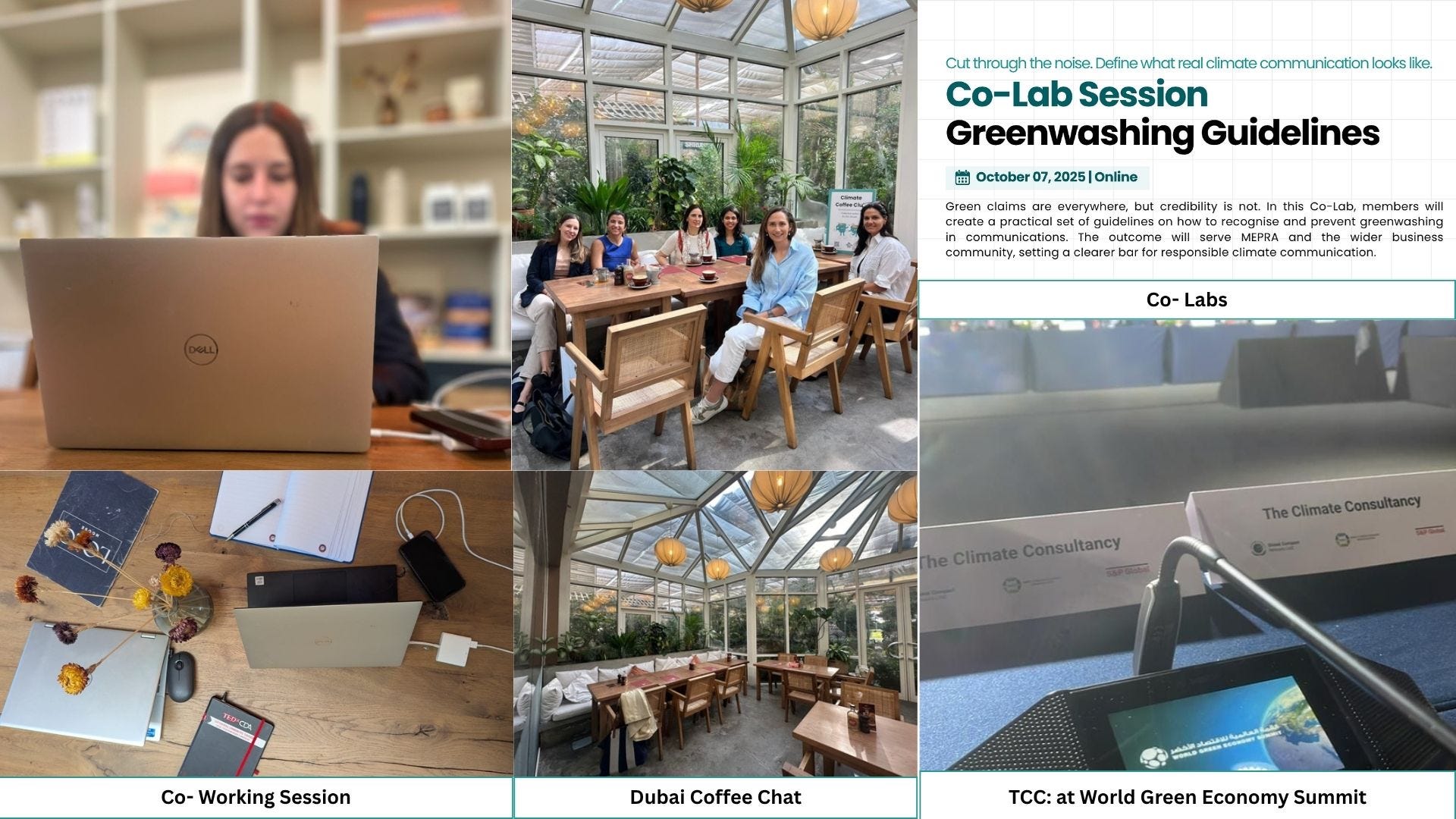
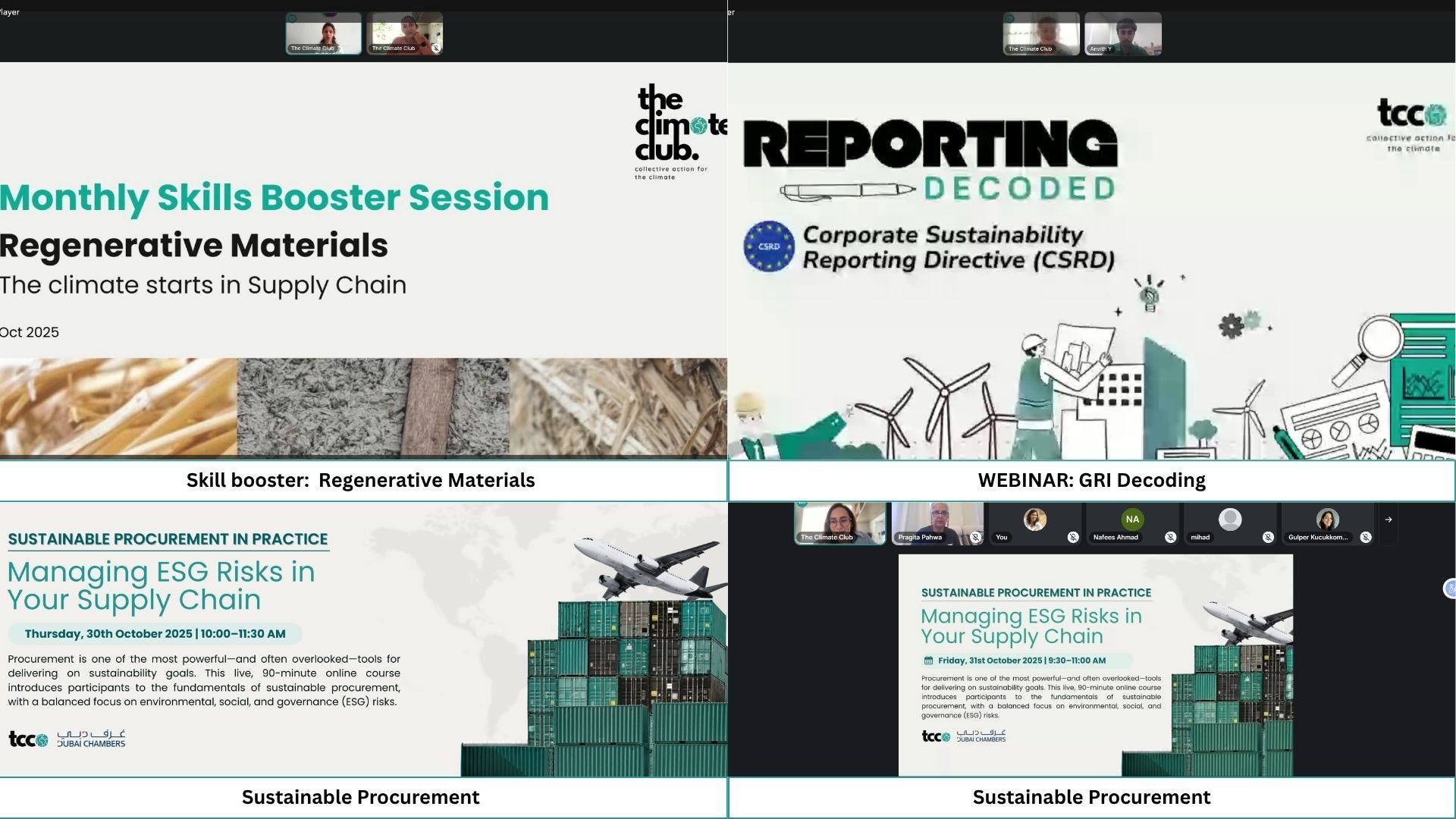
Here’s a quick look at this month.
Co- Lab - Members of Co-Lab came together to co-create practical guidelines for mitigating greenwashing in MEPRA. The session sparked rich dialogue and clear next steps toward building a regionally relevant framework that empowers communicators to lead with credibility and impact.
Co-Working session- This month’s session brought together purpose-driven professionals for a day of focused work, shared energy, and spontaneous collaboration. A reminder that productivity thrives in community.
World Green Economy Summit- Thanks to Adèle Guidot, Farzana Hussain, and Amna Elnour at Global Compact Network UAE for the invitation to join the closed-door CFO Ministerial Roundtable at World Green Economy Summit hosted by World Green Economy Organization (WGEO) Dubai. Pearl Samandari Massoudi and Hanna Paulson represented TCC on the roundtable alongside many accomplished leaders in sustainability.
Dubai Coffee Club- In a small-group session with Carola Galeppini of Unilever, our October Coffee Club explored how procurement decisions influence sustainability from ethical sourcing to workforce practices. The discussion emphasized the need for capacity building, prevention, and remediation approaches to embed best practices across supply chains.
CSRD decoding- In a short, focused webinar, participants gained clarity on the EU’s Corporate Sustainability Reporting Directive (CSRD) who it applies to, how it connects with other standards, and what steps to take now. The session sparked curiosity and equipped professionals with practical insights to strengthen ESG reporting.
Skill Booster- Our monthly skill booster session introduced participants to regenerative materials those that actively restore ecosystems, renew resources, and support human and planetary well-being. Through real-world examples across fashion, construction, packaging, and urban design, attendees explored how material choices can reduce carbon emissions, restore biodiversity, and build community resilience.
Sustainable Procurement in Practice- Procurement is a powerful yet often overlooked lever for sustainability. In this 90-minute online session hosted by Dubai Chambers, participants explored how sourcing decisions shape environmental, social, and governance (ESG) outcomes. Participants left with practical tools, templates, and the confidence to take their first steps toward ESG-aligned procurement.
We hope you’ll continue to grow with us and deepen our impact in the UAE and beyond.

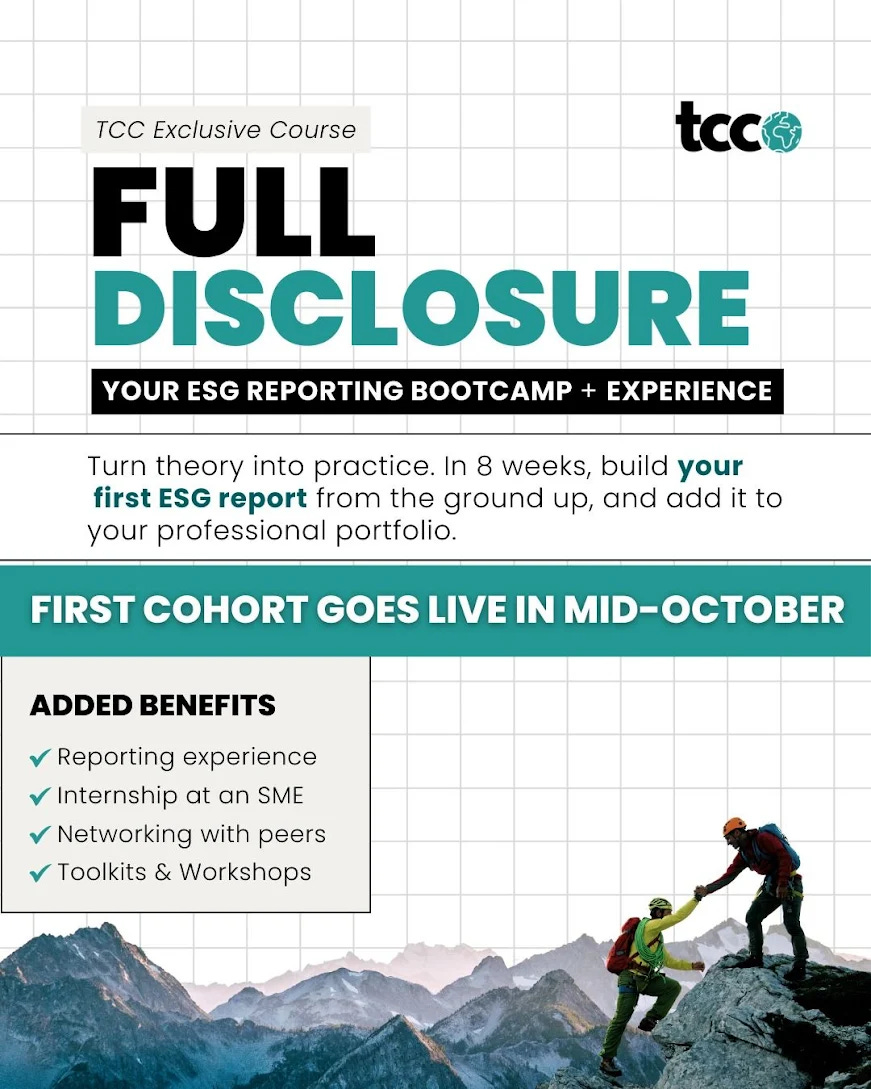
Full Disclosure- Join us for an eight-week online course designed to equip professionals with the tools, context, and confidence to manage ESG initiatives no prior background required. Participants will explore key reporting frameworks, assess organizational readiness, and gain hands-on experience in crafting transparent, impactful ESG reports.
Register here: Link to the ESG Reporting Course
In addition to the Co-Labs, members gain access to the webinar library, job board, professional opportunities, and community discussions. If you enjoy this content and want to connect with other professionals in Dubai and beyond, consider supporting our work through a membership for the price of a coffee a month (AED 30/ month). Explore the Hub or Create and Account Here.
See you there!
Sign in to our Circle Hub to get real-time updates, event reminders, and exclusive resources tailored to your climate and career journey.
🌎 We are TCC, a group of climate enthusiasts, educators, and dreamers. Each month, we’re thrilled to share a curated mix of resources, fresh insights, and inspiring stories to help you navigate the ever-evolving sustainability landscape. Whether you’re a seasoned expert or just starting your journey, this is your space to learn, grow, and take action. Together, let’s make sustainability personal, practical, and powerful. Thanks for joining us!